Kitsch Heatless Curling Set vs. Soft Rollers and Overnight Braids
Compare three no-heat styling methods for side sleepers, short layers, and mornings when you have very little time to undo the set.
In this guide
The difficult part of overnight curls often arrives hours after you have wrapped your hair. You turn onto your side and feel a stiff bit of the set pressing against your ear. By morning, one front section has slipped out, and the time you planned to save goes into fixing it. Before buying a heatless tool, choose a placement you can tolerate for the length of time it takes your hair to set. If you sleep badly in the arrangement, you will eventually stop using it even if you like the finish.
The Kitsch Satin Heatless Curling Set is a useful example of a wraparound ribbon system. The Kitsch XL Satin Heatless Curling Set gives you a second version of the same general approach. Independent soft rollers and braids create different shapes with different pressure points. This comparison is based on the designs and each method’s practical requirements. It does not assume a specific result or that any of the options is comfortable for every sleeper.
What each method asks of your hair
A wraparound ribbon sits over the top of the head with the hair wound around its two sides. As you work down the lengths, you bring more hair into each side and secure the ends. If your pieces are long enough to travel around the ribbon, this can create a coherent direction through several layers. Long front pieces can follow the same path as the rest of the hair. Short pieces may not reach far enough to stay in place, so pay attention to the distance between the top of the ribbon and the shortest part you expect to curl.
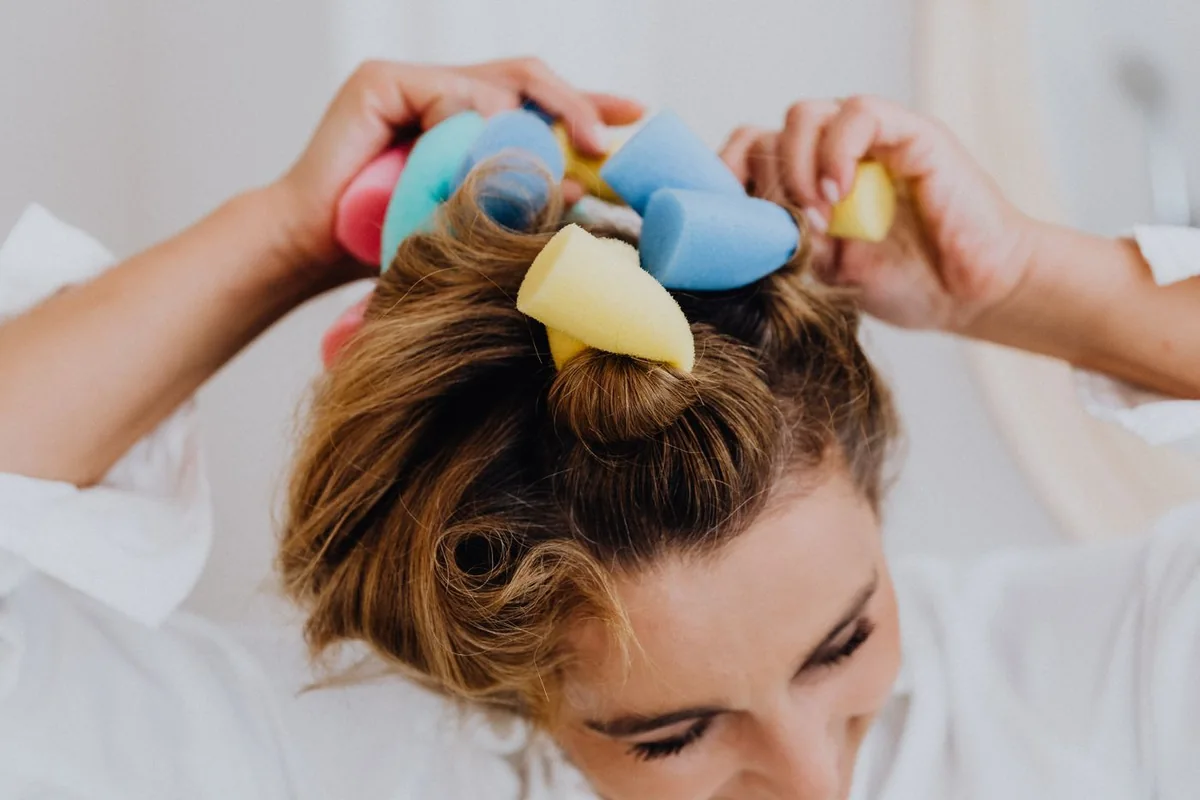
Rollers separate the hairstyle into more independent sections. Instead of asking all the layers on one side to follow a continuous path, you choose where each section starts and how much hair it holds. That makes rollers useful for giving a fringe, crown or a few face-framing layers their own shape. Using six rollers when you only need two adds setup time and creates more points of contact against a pillow. Start with the smallest number of sections that would give you the shape you want.
Braids use the structure of the hair itself. They tend to produce a wave with a different shape from winding around a round ribbon. A braid can be set up high or low depending on where you want the wave to begin. With little hair left below the tie, the ends may look different from the middle. If a visible crease at the end bothers you, leave room to secure it gently and consider whether a roller around the ends would suit the look better. A braid is an economical first test because you can do it with hair ties you already have.
Choose by where your head meets the pillow
Side sleepers often feel whatever sits above or behind their ear. Wrap the ribbon while you are fully awake and try lying on your usual pillow for a few minutes. If the position presses into the same spot that supports your head, move the set upward or choose a method that leaves that side clear. A soft material does not guarantee comfort when the section is bulky or tightly bound. Someone who falls asleep on their back may have different pressure points from someone who changes sides throughout the night.
Back sleepers may prefer to leave the nape free rather than put a bun or large rollers at the center of the back of the head. If two side sections stay outside the main contact point, a ribbon can be workable. If you change position several times, a loose braid may be easier to arrange so it does not get trapped under a shoulder. A practical rule is to put the set where you would be comfortable wearing a soft hair tie for the same period. Take it out if it pulls, presses or interferes with sleep.
You can also do a heatless set before bed and remove it earlier. Try setting the front pieces while you do something around the house, or after a morning shower when you have a longer stretch before getting dressed. It gives you less time with the set in place, but it can be a better compromise than trying to sleep in an arrangement you will not repeat. If this is how you will really use it, choose a tool that can be installed and removed easily rather than a kit built around a full overnight set.
Start with a small section instead of a whole-head experiment
The first section you wrap should be one you understand. Choose a piece that is long enough to go around the form without pulling on the root. If it drops out before you secure the end, try a smaller amount of hair or a different position. Make the tension comfortable and similar across sections. A very tight side and a loose side make it hard to tell whether the results are caused by the method or by the difference in how you wound them.
Consider starting moisture before deciding a tool has failed. Sections that are too wet at bedtime may still be damp when you need to unwrap them. On thick hair, the inner layers of a large bundle can take longer than the visible ones. Try the method first with hair in the condition the manufacturer recommends. When changing your own routine, change how much you dampen the section before changing the wrapping direction and product at the same time. When the hair has dried, release it without tugging the lengths against the fabric and see how it settles before separating it into smaller pieces.
| Main concern | Start with | Reason to choose another method |
|---|---|---|
| You want a continuous bend through long side sections | Wraparound ribbon | The front layers will not stay wrapped or the ribbon presses on your ear |
| You only need to shape bangs or the top | A few soft rollers | The rollers leave pressure points or the barrel is too large for the layers |
| You want a loose wave with equipment you own | Loose braids | You prefer a smooth round bend or the ends always come out straight |
| Your dense hair is hard to fit on the current ribbon | Compare the XL ribbon design with your section length | A larger form creates too much bulk at your sleeping position |
Decide whether a kit is worth owning
Buy the standard ribbon when your lengths reach it easily, you want the finish of two coordinated sides, and you can wear it comfortably for the time it needs. Look at the XL option if the standard length or bulk capacity is the reason your ends will not stay on a ribbon, and compare the dimensions provided for the exact version. Avoid assuming XL will work better for short layers. The additional room is most useful when you can fill it. Choose rollers when you want to focus on a few shorter sections. Check what the rollers use to close and whether that fastening point would be against your pillow.
Before spending, try a braid or a small set with something you already own on a night when you have time to adjust in the morning. Keep track of which section is difficult to shape, where you feel pressure, and how easy the pieces are to take out. Those details can help you shop for a shape and material instead of buying a whole kit because the photograph shows curls you like. The right method is the one you can live with while it works and repeat on the next ordinary night.