BAGGU Dopp Kit vs. Dagne Dover Small Hunter for Weekend Makeup
Compare two bag layouts and pack a workable weekend kit around the compacts, brushes, liquids, and counter space you will actually have.
In this guide
Picture getting ready for a wedding in a hotel room where three people share a narrow counter. You need the concealer that rolled under a brush, and you cannot open your toiletry bag any farther without knocking over someone else’s things. The bag fit easily in your carry-on, yet it is inconvenient at the destination. A good weekend case solves both jobs. It has to occupy a manageable amount of luggage space and give you useful access to the items you reach for in a different room.
The BAGGU Dopp Kit and Dagne Dover Small Hunter Toiletry Bag make a helpful comparison because they approach organization differently. BAGGU presents its Dopp Kit as a compact way to gather toiletries. The Small Hunter has a removable zippered pouch, a slip pocket and elastic loops. Those are meaningful differences for a traveler who uses one zipper for everything versus someone who needs small items in consistent places. This comparison is based on the brands’ descriptions and product photographs. It does not grade either case on leak resistance or durability.
Empty the bag you already take
On the next ordinary morning, set aside the makeup you really use. If you are traveling for a special event, make a second pile of items you will add for that event. Try to keep the items for regular mornings together. A base product, one cheek color, a brow item and a lip product may take up surprisingly little space. The foundation bottle, powder compact and brush you need for an evening look can change the shape of the whole kit. Packing them as a single unexamined group often makes a weekend bag larger than it needs to be.
Measure the widest compact, tallest bottle and longest brush with any cover you use. Pay attention to a brush that needs to travel without bending the bristles. The longest object may determine your case length, while a compact or bottle determines depth. Try laying the items out in the order you want to see them. If the bottles have to sit on top of the powder and blush in your existing bag, consider whether moving the liquids to their own pouch would make the original bag workable. You may already have the space you need once the contents are arranged differently.
Check the difference between a case’s outer dimensions and the space it can use. A bag with rounded corners may not accept a rectangular compact that matches its advertised width. A narrow zipper may require you to turn a flat palette before it will slide in. Look at images of the opening, especially if you want to pull out a compact with one hand. Compare your largest object to the opening rather than to the most generous dimension printed in the listing.
When a straightforward main cavity works
A simple dopp kit suits a traveler who uses a small number of obvious objects. You can put a larger compact on the bottom, slip a covered brush along a side and place the products you want first near the opening. The visible arrangement is easy to change for different trips. It can also be easier to empty at home after travel, since fewer small objects can disappear into pockets you forgot you packed.
The tradeoff is that loose small items can collect at the bottom. Think about the things you reach for without looking, such as a brow pencil, a contact lens case or a hair tie. Put them in a small pouch you already own and see whether opening that extra zipper bothers you. If you only need the pouch to keep one item from rolling out, a reusable small sleeve may be enough. If every product needs a separate container inside the bag, the simple layout may be creating the same problem it was supposed to solve.
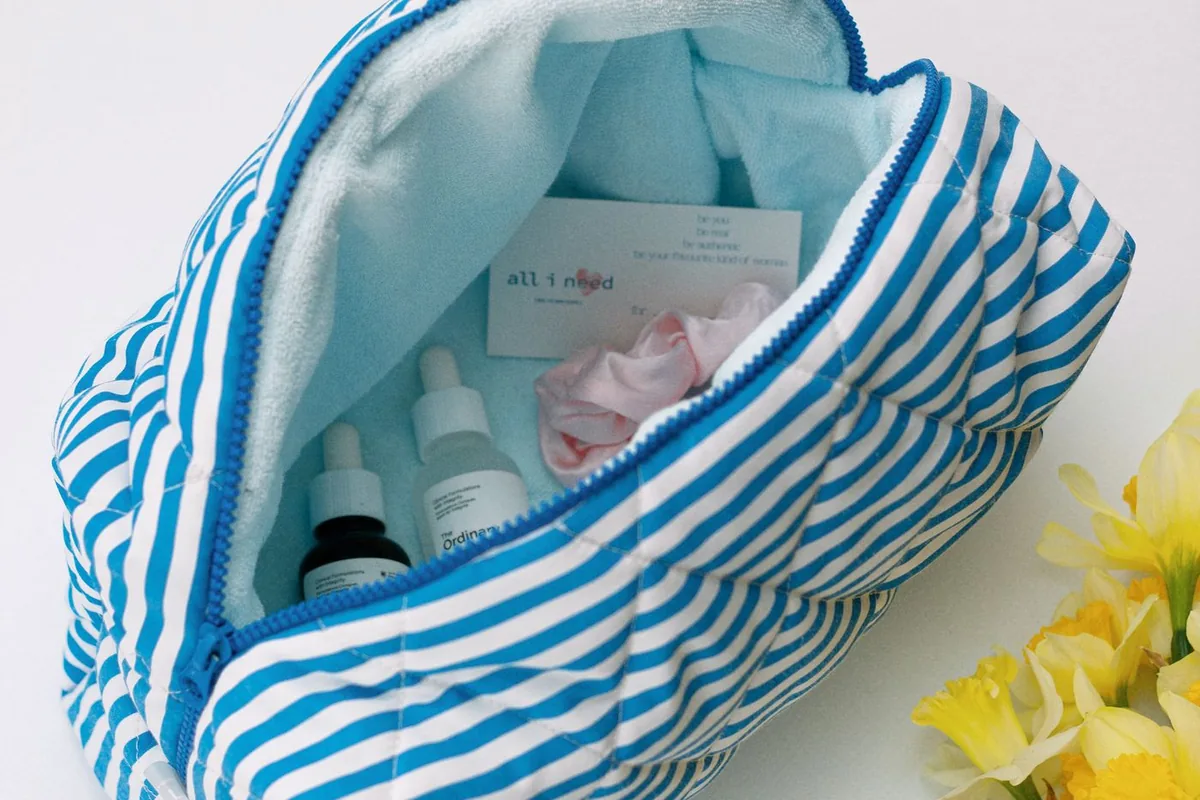
BAGGU’s Dopp Kit is worth comparing for a flexible packing layout. Use the measurements and views on the exact listing to decide whether a large palette or favorite brush can fit. Color and pattern can make a case easy to spot in a bag, but they do not tell you how it opens or how the lining should be cleaned. Read the care notes and check the inside of the bag rather than assuming a fabric you recognize elsewhere in the brand has identical care requirements here.
When organization is worth the space it takes
The Small Hunter is worth a look when tiny items need to come out in predictable order. Its elastic loops can give an appropriate small product a regular place. Its removable zippered pouch can act as an inner kit you take to the mirror while leaving the larger case in your luggage. The slip pocket can keep a narrow or flat item from mixing with everything else. Those features are useful if you will use them. They occupy space and add edges around the remaining cavity, so inspect the layout against the size of the items you pack.
A removable pouch is especially useful when the place you get ready is separate from the place you unpack. Keep the items for a quick touch-up in it and carry only that piece to the bathroom. Put the extra event makeup in the main bag and take it out later. If you always empty the entire case onto the counter, the extra organization may simply mean putting everything back in several different compartments. Your own unpacking habits should decide the value of those features.
| How you get ready away from home | Useful layout | What to check before ordering |
|---|---|---|
| You use a few large, easy-to-spot items | Simple main cavity | Largest compact can pass through the opening |
| Tiny products go missing in a mixed bag | Slip pocket, loops, or removable pouch | Items fit the organizers without occupying all the main space |
| You share a narrow sink with another traveler | Bag stays open without a large footprint | The lid or sides will not cover the only clear space |
| You are flying with several liquids | Separate checkpoint pouch plus makeup case | You can remove the liquids without unpacking everything |
For one evening event, pack the small set you will take to the venue separately from the full kit. A lip product and a compact can travel in the removable pouch or an existing sleeve. If the pouch is too big for the evening bag, it does not need to serve both purposes. On the return trip, check the small pockets for loose items before you zip the main case. A fixed pocket works best when you can see whether it is empty and notice if a cap or earring was left behind.
Handle the parts that can leak separately
Water resistance on a bag’s outer material does not establish that the seams and zipper will contain a spill. Close and inspect every liquid container. Consider placing spill-prone products in their own appropriate pouch so a leaky bottle cannot get directly into your brushes or powder. If you fly in the United States, read the TSA travel checklist before packing liquids, gels and aerosols in carry-on luggage. A beauty case is not automatically the liquids bag you need at security. Organizing the two separately can make both the checkpoint and the hotel counter easier to manage.
Buy a simple bag if you can reach what you need in one open cavity and want to change the layout from trip to trip. Buy the Small Hunter if the removable pouch and fixed places solve problems you encounter each time you travel. Keep your current case if it already holds the routine once you remove products you rarely wear. A weekend bag is small because the routine is small, not because you found a way to force a full bathroom cabinet through a shorter zipper.